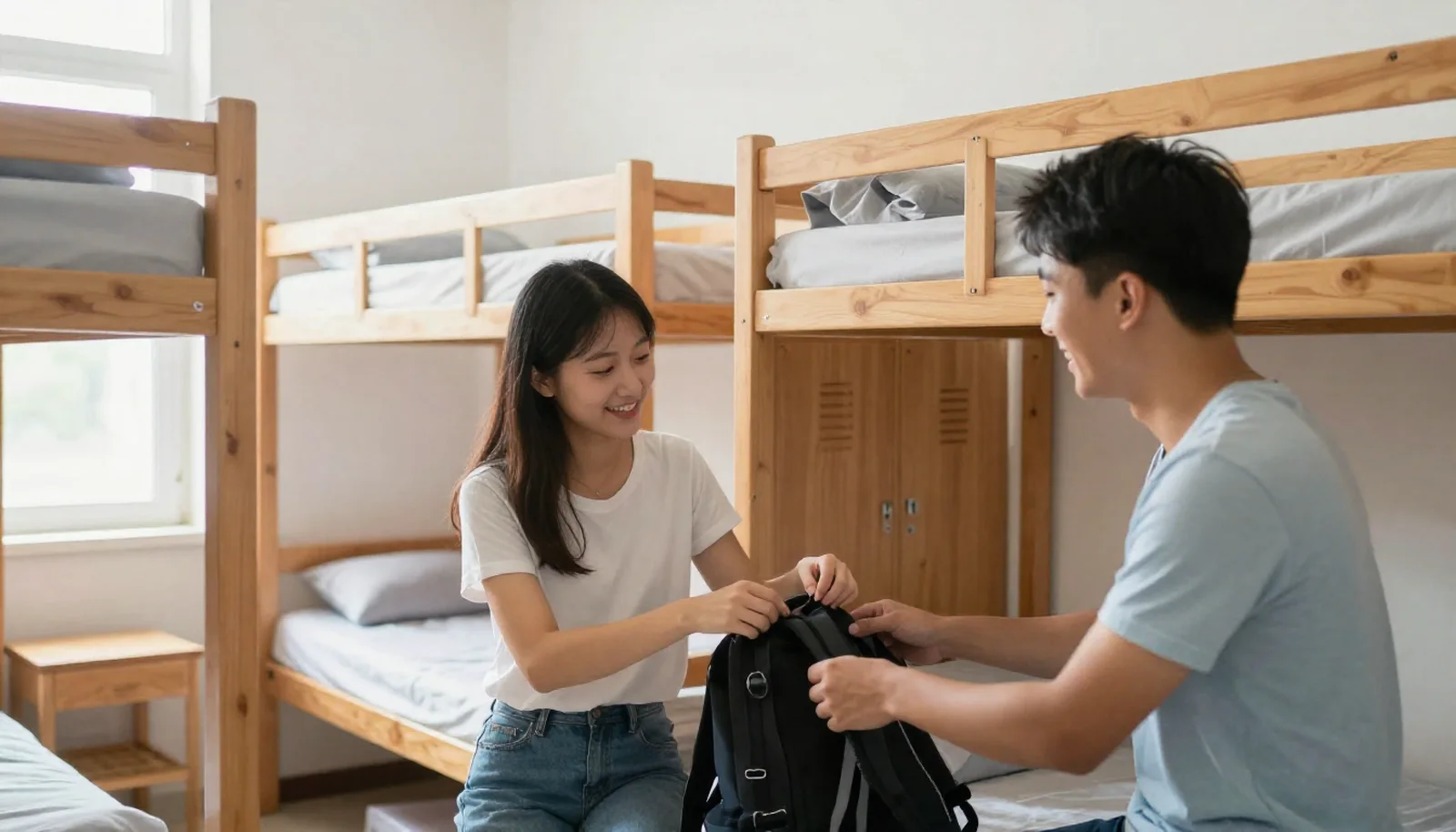
Staying in a hostel for the first time is easier than it sounds. A hostel is budget accommodation where you usually rent a bed in a shared dorm room, though many hostels also offer private rooms. Before booking, read recent reviews, check the location, lockers and house rules, and pack a padlock, earplugs, a towel and flip-flops. In the dorm, keep noise and light low at night, pack quietly in the morning and clean up after yourself in the shared kitchen.
This guide explains what to expect, how to choose the right room and how to be a good roommate, so your first night feels relaxed rather than awkward.
What is a hostel and is it right for you?
A hostel is a type of accommodation built around shared spaces. Instead of booking a whole room, you often book one bed in a room with several others. Bathrooms may be shared or attached to the room, and most hostels have common areas such as a lounge, a kitchen or a terrace where guests spend time together.
Hostels suit travellers who want to keep costs down, travel solo or enjoy meeting people. They are not only for young backpackers: many welcome guests of different ages, families and people travelling for work. If you value complete quiet and privacy, a private room in a hostel or a different type of accommodation may suit you better.
Dorm or private room: which should you choose?
Most hostels offer a few types of rooms. The names vary, but these are the most common:
- Mixed dorm. A shared room open to guests of any gender. Mixed dorms are often the most widely available option. Room sizes vary a lot, from a handful of beds to large rooms.
- Female-only dorm. Many hostels have dorms reserved for women. They are a popular choice for women travelling alone who feel more comfortable in a women-only space.
- Private room. A room just for you or your group, with your own key. Some have a private bathroom, others share a bathroom down the hall, so read the description carefully.
As a rule, smaller dorms tend to be quieter, while larger ones are usually cheaper. For a first stay, a smaller dorm or a private room can be a gentle way to try hostel life.
What should you check before booking?
A little research before you book makes a big difference. Look at these points:
- Recent reviews. Read reviews from the last few months and look for comments on cleanliness, noise, safety and staff. One bad review is less telling than a pattern.
- Location. Check how far the hostel is from public transport and the places you want to visit, and how the area feels at night.
- Lockers. Find out whether each bed has a locker, how big it is and whether you need your own padlock.
- Age policies. Some hostels set a minimum or maximum age for guests or for dorms. These policies differ from place to place, so check the hostel's own rules before you book.
- House rules and practical details. Look at check-in and check-out times, any quiet hours or curfew, whether towels and bed linen are included, and whether there is a kitchen guests can use.
If something is unclear, message the hostel before booking. A quick answer is often also a good sign of how helpful the staff will be.
What to pack for your first hostel stay
A few small items make dorm life much more comfortable:
- A padlock. Useful for lockers, which often need your own lock. A small combination lock means no key to lose.
- Earplugs and an eye mask. They help you sleep through snoring, late arrivals and early alarms.
- A quick-drying towel. Not every hostel includes towels, and some charge for them.
- Flip-flops or shower shoes. Handy for shared bathrooms and showers.
- A long charging cable. Sockets are not always next to your bed, so a longer cable can help.
- A small bag for the bathroom. A wash bag you can hang up keeps your things dry and easy to carry.
Packing your things in smaller bags or pouches also helps you find them quietly in the dark.
Dorm etiquette: how to be a good roommate
Hostel life works best when everyone shows a little consideration. These simple habits go a long way:
- Keep the light and noise down at night. If you come back late, use a small torch or your phone's screen on low brightness instead of the main light, and keep conversations for the common area.
- Pack the night before an early start. Rustling plastic bags at dawn wakes the whole room. Prepare your things in advance and leave quietly.
- Keep your things in your own space. Do not spread your belongings over other beds or the floor.
- Respect the shared kitchen. Wash, dry and put away what you use, label your food in the fridge and only use what is yours or clearly marked as free.
- Be mindful in the bathroom. Keep showers reasonably short when others are waiting and leave the space as you found it.
Most of all, be friendly. A quick hello when you enter the room makes the atmosphere easier for everyone.
Staying safe and keeping your things secure
Most hostel stays are uneventful, but basic care is sensible. Keep your passport, cards, cash and electronics in your locker whenever you are not carrying them, and lock it even if you only step out for a moment. Do not leave valuables on your bed or charging unattended in a common area. If your bed has no socket and you must charge your phone elsewhere, stay nearby or use the locker if it has a charging point.
Know where the emergency exits are, keep your room key or card with you, and tell reception if something feels wrong. Trust your instincts: if you are uncomfortable in a room, ask the staff whether you can move.
How do you meet people at a hostel?
Meeting people is one of the best parts of staying in a hostel. Common rooms, kitchens and terraces are natural places to start a conversation, and many hostels organise activities such as walking tours, shared dinners, games nights or day trips. Joining one is an easy way to meet others without any pressure. Simple questions like where someone has come from or what they recommend in the city usually work well.
If you would like to know who else will be around before you arrive, mytripdate lets you see people travelling to the same city on the same dates and send them a message. As always, take it step by step: chat first, prefer verified profiles and meet in a public place.
Frequently asked questions
Are hostels safe for solo travellers?
Many solo travellers stay in hostels. Choosing a well-reviewed hostel, using the lockers and following basic precautions helps. Female-only dorms or private rooms are options if you want more privacy.
Do I need to bring my own sheets?
Bed linen is often included, but not always. Towels are less often included. Check the hostel's description or ask before you arrive.
Is there an age limit for hostels?
It depends on the hostel. Some have minimum or maximum ages, others welcome everyone. Always check the individual hostel's policy before booking.