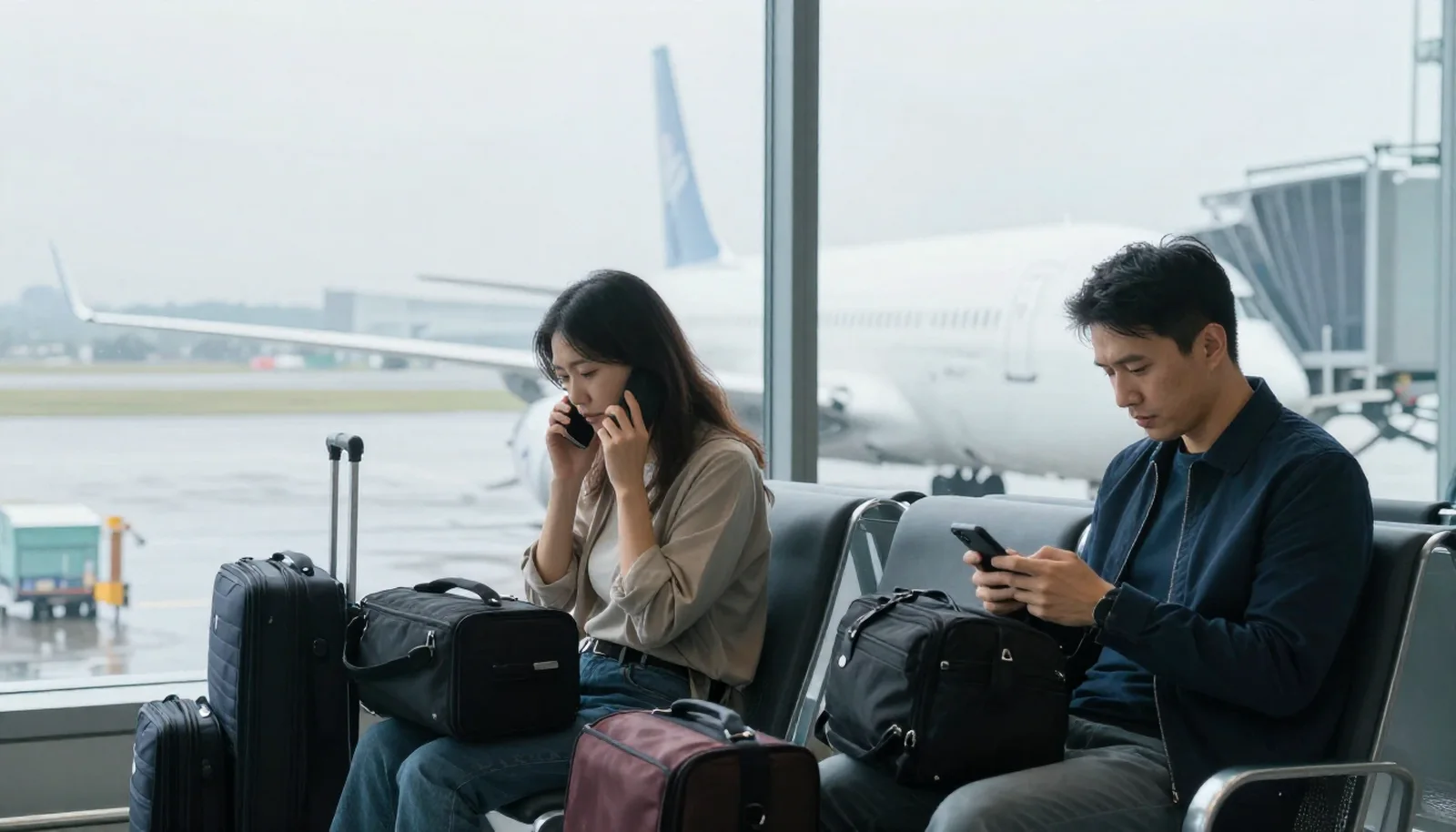
If your flight is cancelled or you miss a connection, act quickly but calmly: check the airline's app, join the queue at the service desk and call the airline at the same time, because whichever channel answers first can often rebook you. Ask about the next available flight, keep your boarding pass and booking reference, and save every receipt. What you are entitled to, such as meals, a hotel, a refund or compensation, depends on the airline, your ticket and the rules that apply to your route, so check the official information.
A disrupted journey is tiring, especially late at night. This guide puts the steps in a sensible order, so you know what to do first and what can wait. It is general guidance, not legal advice, and rules change, so confirm the details with the airline and official sources.
What should you do first when your flight is cancelled?
The first minutes matter, because seats on the next flights fill up quickly when many passengers need to be rebooked at once. Try several things in parallel:
- Check the airline's app and your email. Many airlines rebook passengers automatically or show options in the app. Before accepting, check that the new flight works for you.
- Go to the service desk. Join the queue at the transfer, service or ticket desk, even if you are also trying online. Staff can sometimes see options the app does not show.
- Call the airline while you wait. Lines may be busy, but calling while you queue costs nothing. If you booked through an agent or booking site, their support line may also help.
- Stay calm and polite. Desk staff are dealing with many upset travellers. Clear, friendly questions usually get you further than anger.
- Write down the details. Note the flight number, the time of the announcement, the reason given, and any names or reference numbers from your calls.
One ticket or separate tickets: why does it matter?
For a missed connection, the key question is how your journey was booked. If all your flights are on one ticket or one booking reference, the airline is usually responsible for getting you to your final destination when a delay on the first flight makes you miss the next one. In that case it normally rebooks you on a later connection without charging you for a new ticket.
If you bought separate tickets, for example with two different airlines or as two separate bookings, the second airline usually has no obligation to help when you arrive late from the first flight. You may be treated as a no-show and have to buy a new ticket. Some booking sites offer their own connection guarantee for self-transfer trips; if you have one, read its terms and contact them straight away.
One more thing to know: if you miss a flight, some airlines cancel the remaining flights on the same booking, including your return. If you know you will miss a flight, tell the airline as early as you can and ask them to keep the rest of your booking.
Rebooking or refund: which should you choose?
When a flight is cancelled, airlines usually offer a choice between travelling later and getting your money back. The right option depends on your plans:
- The next available flight makes sense if you still need to travel soon. Ask about other routes, nearby airports and, where possible, partner airlines.
- A flight on a later date may suit you if your plans are flexible. Check whether the change is free in this situation.
- A refund may be the better choice if the trip no longer makes sense, for example if you would miss the event you were travelling for.
- A voucher or travel credit is sometimes offered instead of money. Before you accept, check whether you are entitled to a cash refund, and read the expiry date and conditions.
Keep in mind that accepting a refund often ends the airline's responsibility to get you to your destination, and it may also affect help with meals or a hotel. If you are unsure, ask the agent what each option means for you before you decide.
Will the airline pay for food or a hotel while you wait?
It depends. Some airlines give meal vouchers, a hotel room and transport to it when passengers have to wait a long time or overnight, and in some regions the rules require this in certain situations. Elsewhere it is mostly a matter of the airline's own policy, and help may be limited, especially when the cause is outside the airline's control, such as severe weather.
Ask at the desk what support is available and how to get it. If they cannot help on the spot and you pay for reasonable costs yourself, keep the receipts and ask whether and how you can claim them back later. Choose sensible options, because expensive meals or hotels may not be refunded in full.
What about your luggage and the people waiting for you?
If you are rebooked, ask whether your checked luggage will be moved to the new flight or whether you need to collect it. Keep essentials such as medicine, chargers and a change of clothes in your hand luggage. If your bag does not arrive at your destination, report it at the airport's baggage desk before you leave and keep the reference number.
Also let people know about the change: your accommodation, your car hire company, anyone picking you up and anyone you planned to meet. If you arranged to meet a travel companion through mytripdate, you can send them a message with your new arrival time, so nobody is left waiting.
Keep your documents, receipts and protections in order
Good records make any later claim much easier. Keep your boarding passes, your booking confirmation, any messages about the cancellation or delay, and receipts for meals, transport, hotels and phone calls. Take photos of paper receipts and of the departure board, in case the originals get lost.
Then check what other protection you may have. Travel insurance sometimes covers delays, missed connections or extra accommodation, but cover differs widely, so read your policy or call the insurer. Some credit cards include travel cover, and your card issuer may be able to help if you paid for a service you did not receive and could not get a refund. Both usually ask for proof.
Are you entitled to compensation?
Some regions have passenger rights regulations. The European Union and the United Kingdom, for example, have rules on cancellations, long delays and denied boarding, which can include care while you wait and, in some cases, compensation. Whether these rules apply depends on factors such as where your flight departs from, where it lands and which airline operates it. Other countries have their own rules, and in some places protection is more limited.
Compensation is not automatic. Conditions and amounts vary, and it is often not payable when the disruption was caused by extraordinary circumstances outside the airline's control. Because the details change and depend on your exact case, check the official passenger rights information from the government or aviation authority for your route.
If you believe you are owed money, contact the airline in writing after the trip, ideally through its official claim form. Include your booking reference, flight numbers, dates, what happened, what you are asking for and copies of receipts, and keep a copy. If the airline rejects your claim or does not reply, official sources for your region usually explain where to turn next.
Frequently asked questions
Am I always entitled to compensation for a cancelled flight?
No. It depends on the rules that apply to your flight, the reason for the cancellation and how much notice you were given. Check the official passenger rights information for your route.
What happens if I miss a connection on separate tickets?
Usually the second airline does not have to rebook you for free, and you may need a new ticket. A connection guarantee from your booking site or your travel insurance may help, so check their terms.
Should I book a new flight myself?
Ask the airline first. If you buy a new ticket without its agreement, you may not get the cost back. If you do buy one, keep all receipts and the airline's replies.
Can I get my money back instead of a new flight?
Often yes when the airline cancels the flight, but the options depend on the airline and the rules for your trip. Check whether the refund is offered as money or as a voucher before you accept.