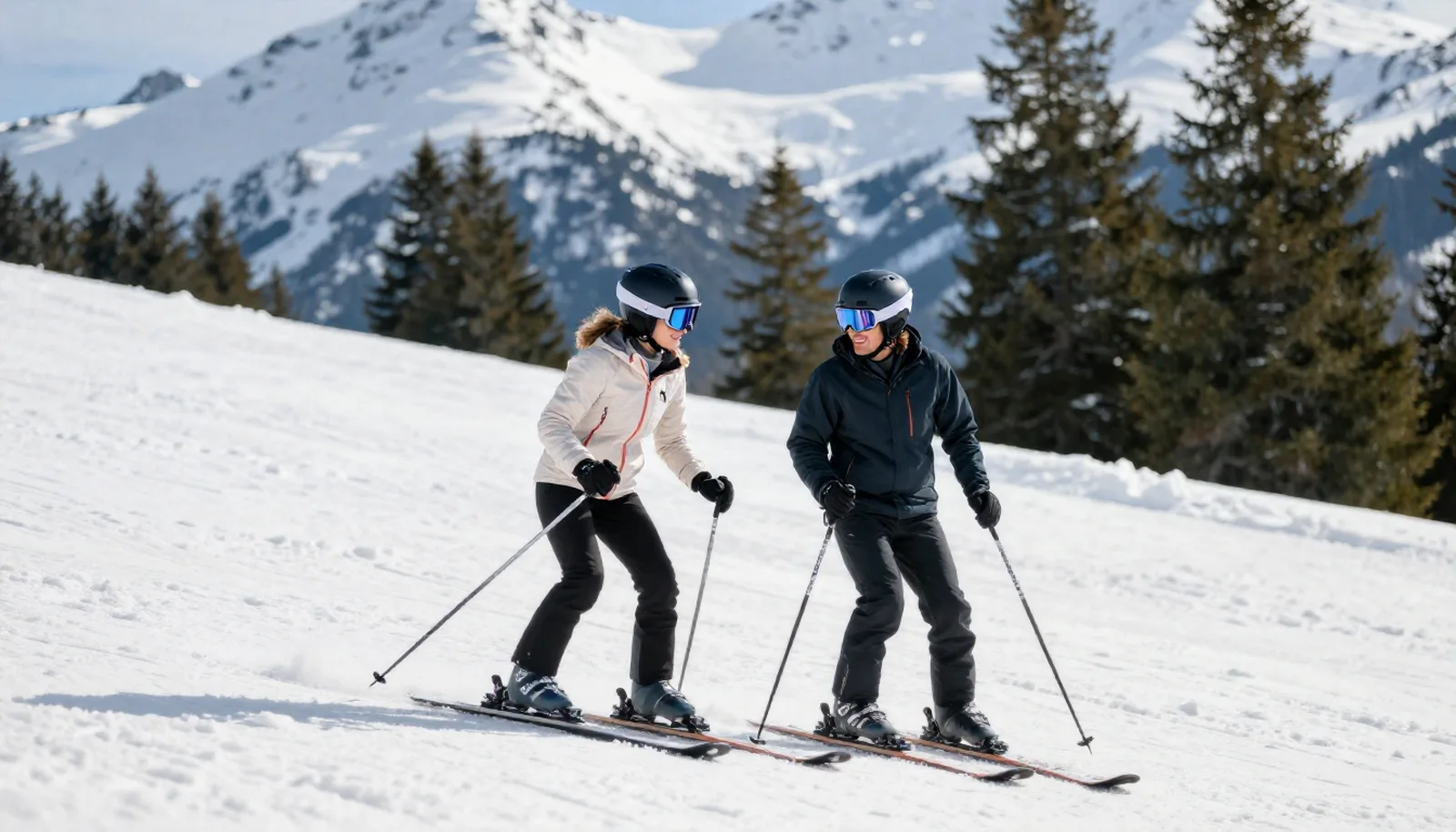
For your first ski trip, choose a resort with plenty of easy slopes, a good ski school and a short transfer, book lessons for at least the first few days, rent your skis and boots instead of buying them, and always wear a helmet. Dress in layers, protect yourself from sun and cold, and check that your travel insurance covers winter sports. Expect the first days to be tiring and slow, and that is completely normal.
Skiing can look intimidating from the outside, but millions of people learn it as adults. A little planning makes the difference between a stressful week and one you want to repeat. This guide covers the practical decisions for a first ski holiday. Details such as prices, rules and what is included differ from resort to resort, so always check the official information for the place you choose.
How do you choose a ski resort for beginners?
Not every resort suits a beginner. Large, famous areas are often built for experienced skiers, while smaller resorts can be calmer and easier to learn in. When comparing options, look at these points:
- A high share of easy slopes. Look at the piste map. You want a dedicated beginner area and several gentle runs to move on to, not just one easy slope surrounded by steep ones.
- A good ski school. Check whether lessons are offered for adult beginners, in a language you understand, and how big the groups usually are.
- A short transfer. A long drive or several changes after a flight eat into your time and energy. A resort that is quick to reach makes a short trip much more relaxing.
- Easy access to the slopes. Carrying skis in heavy boots is tiring. Accommodation close to the lifts or the beginner area saves effort every day.
Snow conditions also matter. Season dates and snow cover vary by altitude, region and year, so check the resort's current information before you book.
Should you take ski lessons?
Yes. Lessons are the single best investment for a beginner. A qualified instructor teaches you how to stop, turn and control your speed safely, and helps you avoid bad habits that are hard to unlearn. Being taught by a friend who skis well rarely works as well, because good skiers are not always good teachers.
Group lessons are usually cheaper and can be sociable and motivating. Private lessons cost more but adapt fully to your pace and fears, and even one or two private sessions can help a lot. Many beginners book group lessons in the mornings and practise on easy slopes in the afternoons. Book early in busy periods, because places can fill up.
Rent or buy: what equipment do you need?
For a first trip, renting is almost always the sensible choice. Skis, boots and poles are expensive, and you do not yet know whether you will ski often or what type of equipment suits you. Rental shops adjust the bindings to your weight and level, and you can usually swap boots that hurt. Boots matter most: they should feel firm but not painful, so tell the staff honestly if something presses.
Always wear a helmet. Helmets can usually be rented with the rest of the equipment, and in some places they are compulsory for certain age groups, so check the local rules. Goggles, gloves and a warm hat or helmet liner are worth buying, because they are personal and inexpensive compared with skis.
What should you wear skiing?
The key is layers, so you can adjust as you warm up during exercise and cool down on the lift. A typical setup looks like this:
- Base layer. Close-fitting thermal top and leggings made of wool or synthetic fabric that moves sweat away. Avoid cotton, which stays wet and cold.
- Mid layer. A fleece or light insulated jacket that you can remove if you get too warm.
- Outer layer. A waterproof, breathable ski jacket and ski trousers. Beginners fall often, so waterproof trousers make a big difference.
- Extras. Ski socks (one pair, not two), waterproof gloves, a neck warmer, goggles and sunglasses. Thick socks can actually make boots more uncomfortable.
How do ski passes work, and what are the first days like?
A ski pass, or lift pass, gives you access to the lifts. Passes are usually sold for one or more days and for a specific area, and prices and conditions vary widely. Some resorts offer a cheaper pass for the beginner area only, which can be enough for the first days. Check what your lessons include, because the lift pass is often sold separately.
Expect the first day to be slow. You will spend time learning to walk in boots, put on skis, get up after falling and use the beginner lifts. Your legs, especially your thighs, will get tired quickly, and the second day often feels harder than the first. Take regular breaks, eat properly and stop before you are exhausted, since many falls happen when people are tired at the end of the day. Most beginners notice real progress after a few days.
Slope safety, altitude, sun and insurance
Runs are graded by difficulty with colours or symbols, but the system differs between countries and regions, so study the resort's piste map and its legend. Many resorts display a code of conduct for skiers. Common principles include giving priority to people below you, controlling your speed, stopping only at the side of the run where others can see you, and looking uphill before you set off. Rules can vary locally, so check what applies where you ski, and never go off the marked runs as a beginner.
The mountain environment needs respect too. At altitude the sun is stronger and snow reflects it, so use sunscreen and lip protection even on cloudy days, and wear goggles or sunglasses. Cold and wind can be harsh on lifts, so cover your face and fingers. Drink water regularly, as dry mountain air and exercise dehydrate you, and at higher resorts some people feel short of breath or get headaches at first.
Finally, check your travel insurance carefully. Many standard policies do not cover winter sports, or only with an extra option. Read what is included, such as mountain rescue, medical treatment and equipment, and whether there are conditions, for example about staying on marked runs.
How do you meet people on a ski trip?
Ski holidays are naturally social. In a group lesson you spend several days with people at the same level, which makes it easy to chat. Chairlifts and gondolas put you next to strangers for a few minutes, and après-ski, the time after the lifts close, is when people relax in cafés, bars and restaurants and talk about their day. If you are travelling alone, on mytripdate you can see who is going to the same city on the same dates and message them before you arrive. Chat on the site first, look for verified profiles and meet in public places.
Frequently asked questions
How many days does it take to learn to ski?
It varies from person to person. Many adults can make basic turns on easy slopes after a few days of lessons, but feeling confident usually takes more than one trip.
Is skiing or snowboarding easier for beginners?
Many people find the first days of skiing a little easier, while snowboarding can feel more natural once the basics are learned. Both require lessons at the start.
Do I need to be fit to go skiing?
You do not need to be an athlete, but skiing is physically demanding. Walking, cycling or leg exercises in the weeks before your trip can make the first days easier.