A night train lets you travel while you sleep: you board in the evening, spend the night in a seat, a couchette or a sleeping cabin, and arrive the next morning. Most sleeper trains in Europe offer three basic options: reclining seats, which are the cheapest, couchettes with several bunks in a shared compartment, and sleeper cabins with fewer beds and more privacy. Booking ahead, packing a small night bag and keeping your valuables close make the journey much easier.
Night trains have become popular again with travellers who want to save a night's accommodation, avoid early flights or simply enjoy the journey itself. This guide explains how they generally work and what to expect on board. Routes, operators, prices and timetables change often, so always check the current timetable and booking conditions before you plan around a specific train.
How does a night train work?
A night train usually leaves in the late afternoon or evening and arrives in the morning. It may stop at several stations along the way, and on some routes carriages are separated from or joined to other trains during the night. Each sleeping carriage is usually looked after by an attendant who checks tickets, shows you to your place and can help with practical questions. Depending on the route, the train may cross one or more borders while you sleep.
Because the journey is long and you spend most of it lying down, it feels very different from a daytime train. You will often share space with strangers, the toilets are usually at the end of the corridor, and the corridor lights often stay dimmed all night.
Seat, couchette or sleeper: which option is right for you?
Names and layouts differ between operators, but most night trains offer some version of these three options:
- Seat: a reclining seat in an open carriage or a compartment. It is the cheapest choice, but sleeping well can be difficult and there is little privacy.
- Couchette: a compartment with several bunks, often four or six, shared with other passengers. Bedding is usually provided. Couchettes are often mixed, and some operators offer women-only compartments; check when you book if this matters to you.
- Sleeper: a cabin with one to three proper beds, usually with a washbasin and sometimes a private toilet and shower. You can often book the whole cabin for yourself or the people you travel with. It costs more, but it offers the most comfort and privacy.
Some newer trains also have small individual sleeping pods or compact cabins. When you choose, think about how easily you sleep, your budget and how much privacy you want. A couchette is a good middle ground for many travellers; if you need a proper night's rest before an important day, a sleeper may be worth the extra cost.
How do you book a night train?
On most night trains you need a reservation for a specific seat, couchette or bed, not only a travel ticket. A few general points help:
- Book early if you can. Night trains have limited space, and the cheaper berths and private cabins often sell out first, especially at weekends and in holiday periods.
- Use the operator's website or a reliable booking platform. Not every night train can be booked on every site, so if a route does not appear, check with the operator directly.
- Check what your fare includes. Some fares include breakfast or bedding, others do not. Read the conditions for changes and refunds as well.
- Expect a supplement with a rail pass. If you travel with a rail pass, you will usually still need to pay for a reservation for your couchette or bed. Check the current rules for your pass.
- Keep your booking available offline. Save your ticket and reservation on your phone and, ideally, on paper too.
Night trains can run late, and some routes are suspended for maintenance or run only in certain seasons. Check the status shortly before you travel and keep the morning of your arrival flexible.
What should you pack for a night train?
Your large bag usually goes on a luggage rack or under a lower bunk, where it is not easy to reach during the night. A small night bag with everything you need until the morning makes life much easier:
- Your ticket, passport or ID card and any documents you need to cross borders.
- Earplugs and an eye mask, because trains are rarely completely quiet or dark.
- A bottle of water and some snacks, as not every train has a dining car or a bar that stays open.
- Comfortable clothes to sleep in and an extra layer, since the temperature can vary.
- A toothbrush, wet wipes and basic toiletries.
- A phone charger and, if possible, a power bank; sockets are not available everywhere.
- Any medication you might need during the night.
Is it safe to sleep on a night train?
Many people travel on night trains without any problems, but it is sensible to take a few simple precautions, as you would anywhere you sleep in a shared space:
- Keep valuables on you. Sleep with your passport, money and phone in a small pouch under your pillow or next to you, not in a bag on the rack.
- Lock the door. Most compartments can be locked from the inside, and many have an extra security latch. Use it at night and agree with the others in your compartment who will lock the door.
- Secure your luggage. A small cable lock that attaches your bag to the rack can give extra peace of mind.
- Know where the attendant is. If something feels wrong, tell the attendant. Do not open the door at night to people you do not know.
- Take care at stations. Busy platforms are where bags most easily go missing, especially at early morning stops.
On some cross-border routes, staff may collect tickets or check documents in the evening so that passengers are disturbed less during the night. If you are not sure what will happen, ask the attendant when you board.
Sharing a couchette with strangers: meeting people and keeping boundaries
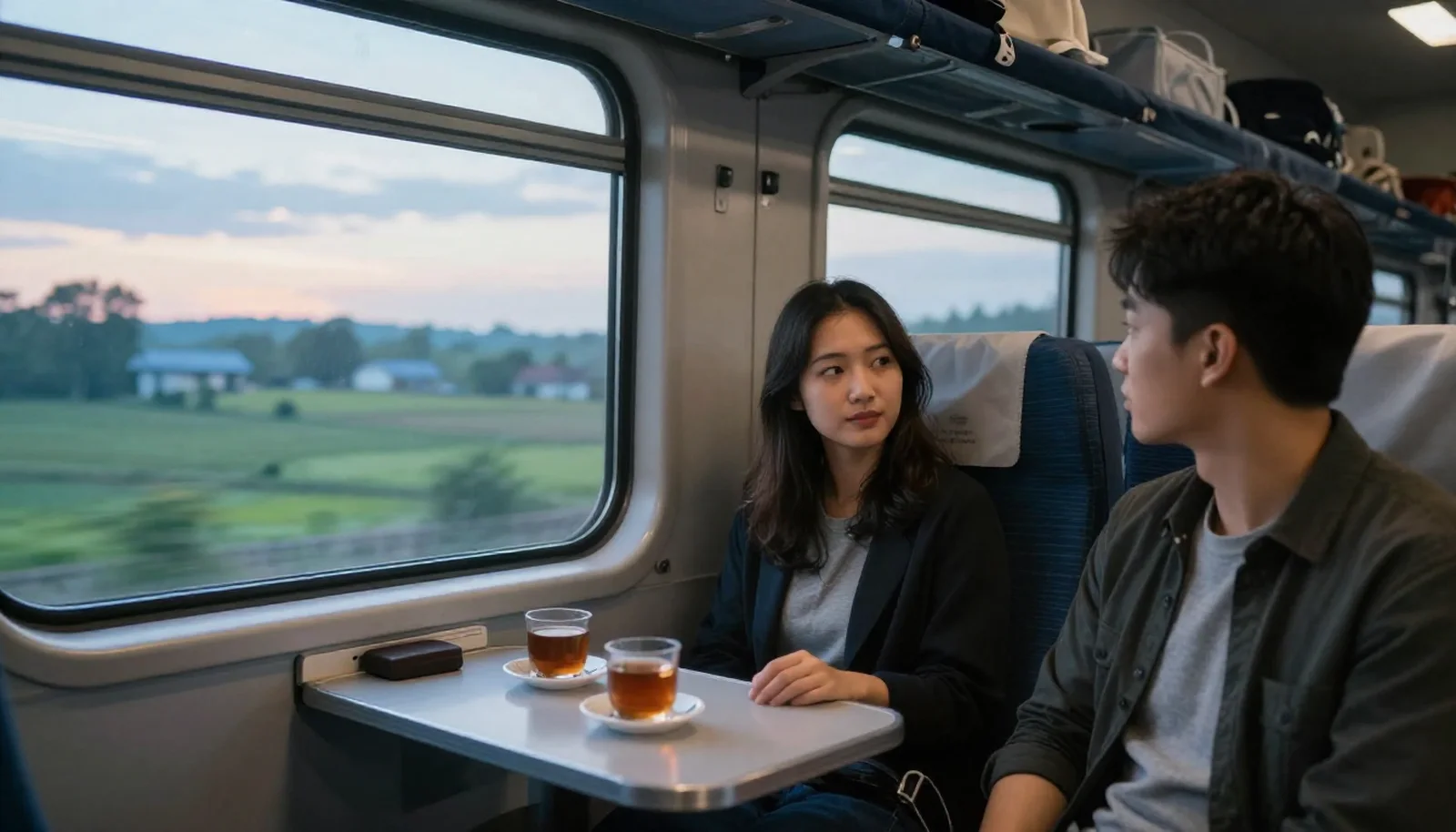
One of the charms of a night train is the people you meet. In a shared compartment you may find yourself talking with travellers from other countries over a snack, or watching the landscape together before the lights go out. A friendly greeting when you come in, a short chat about where everyone is going and simple courtesy go a long way.
A shared compartment also needs shared rules. Agree on when to turn off the light, keep your voice and phone quiet when others want to sleep, and keep your things in your own space. It is completely fine to say that you want to rest and stop chatting, and to accept the same from others. If anyone makes you uncomfortable, you do not need to explain yourself: tell the attendant and ask whether you can move to another compartment if one is free.
If you would rather get to know someone before the journey, on mytripdate you can see travellers who will be in the same city on the same dates and message them first. Take your time, check whether the profile is verified and keep your first meeting in a public place, such as a station café before departure.
Frequently asked questions
Can you sleep well on a night train?
It depends on the person and the type of berth. A bed in a sleeper or couchette is much more comfortable than a seat, and earplugs and an eye mask help. Many travellers find they sleep better once they are used to the movement and sounds of the train.
Are couchettes mixed?
Often, yes. On many trains men and women share couchette compartments, but some operators offer women-only compartments. Check the options when you book.
Is a night train cheaper than a flight and a hotel?
Sometimes, but not always. A seat or couchette can cost less than a flight plus a night in a hotel, while a private sleeper cabin can cost more. Compare current prices for your dates.
Do you need a passport on a night train?
It depends on the route and the countries you pass through. Always carry a valid passport or ID card on international trains, and check the current entry rules for every country on your route.