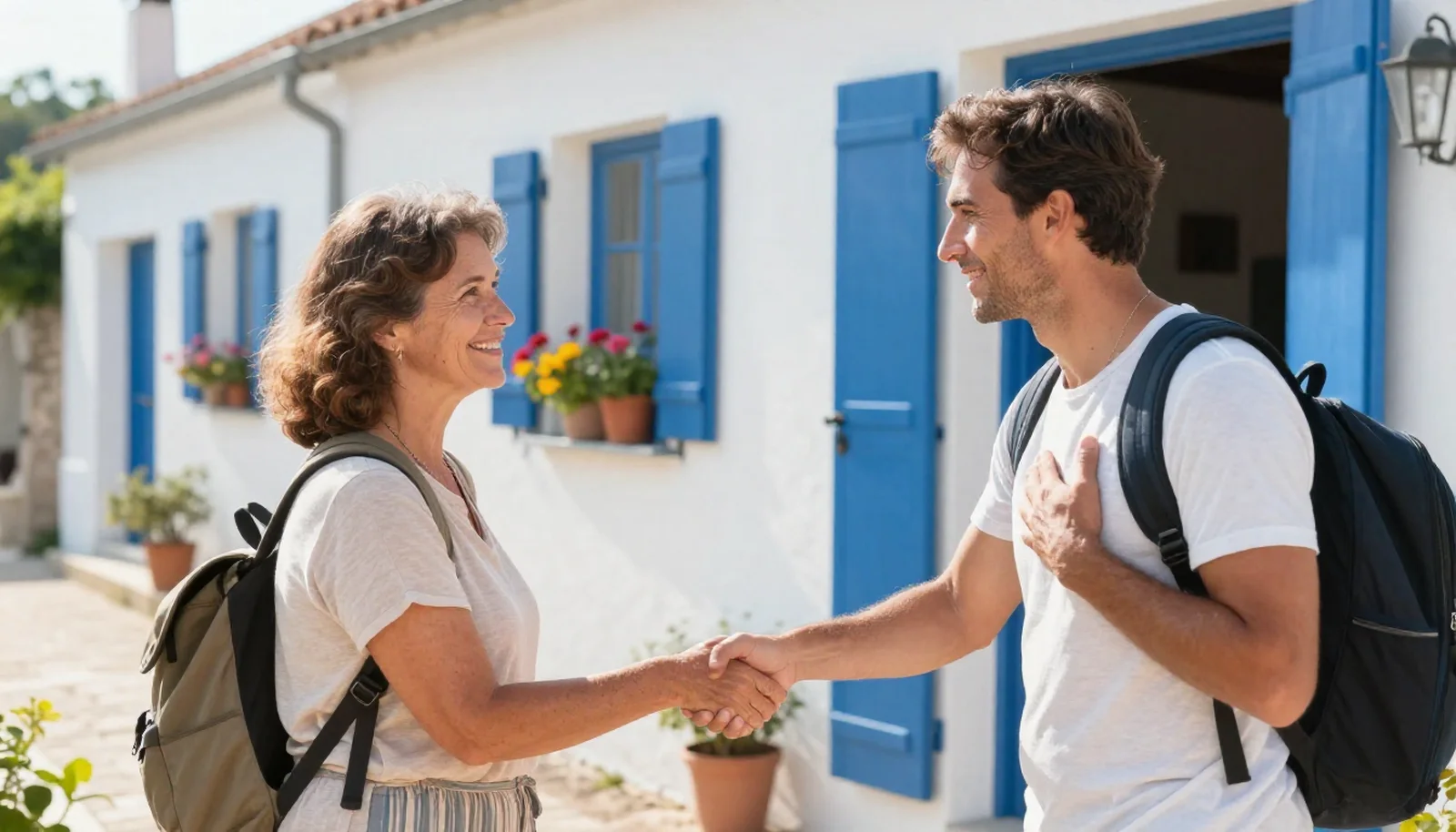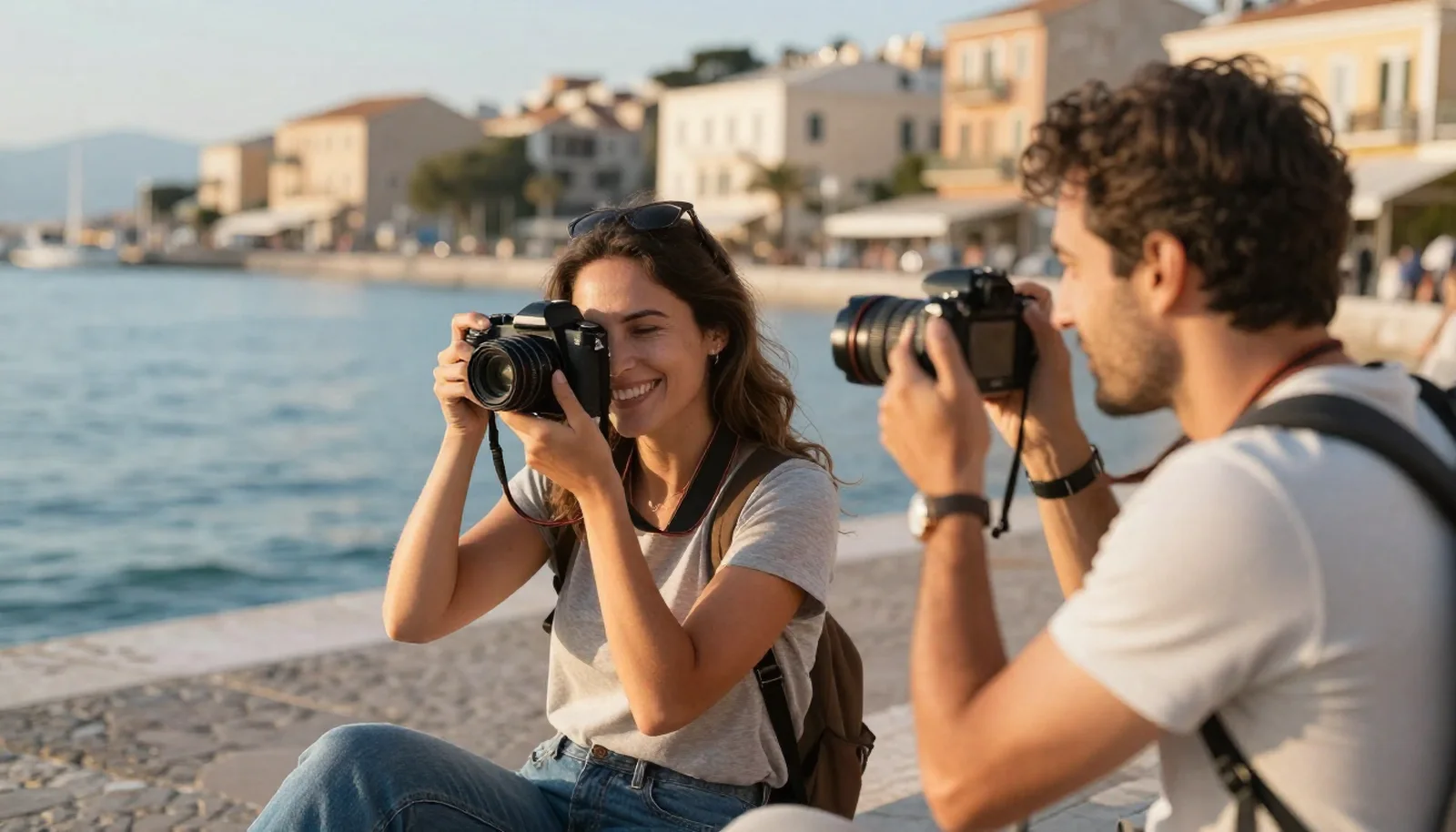
To take great travel photos of each other, keep three things in mind: put the person and the place in the frame together, shoot in soft light such as early morning or late afternoon, and help the other person relax by giving them something to do instead of asking them to "just pose". Take several shots, show them to each other and adjust. For photos of both of you, a phone timer with a small tripod or a polite request to a passer-by usually works well.
You do not need professional equipment. A modern phone is enough for most travel photos, whether you are travelling with a partner, a friend or someone you met on the road. What makes the difference is how you frame the shot, where the light comes from and how comfortable the person in front of the camera feels.
How do you frame a good travel portrait?
A travel portrait tells two stories at once: who the person is and where they are. A few basic composition ideas help both stories come through:
- Use the grid. Turn on the grid lines in your camera app and place the person on one of the vertical lines rather than in the exact centre. This leaves room for the landmark, street or view.
- Decide what matters more. If the place is the star, step back and keep the person small in the frame. If the person is the star, move closer and let the background soften.
- Watch the background. Check that no pole, sign or crowd seems to grow out of the person's head. One step to the left or right often fixes it.
- Keep horizons straight. A tilted sea or skyline is one of the most common reasons a photo looks careless.
- Change your height. Shooting from roughly chest height usually flatters people. Crouching slightly can make someone look taller against a big building.
Leave a little space around the person, especially at the feet. It is easy to crop a photo later, but you cannot add back a cut-off foot.
Find the best light
Light changes a photo more than any setting. The hour after sunrise and the hour before sunset give warm, soft light that is kind to faces. Around midday, the sun is high and creates hard shadows under the eyes and nose. If you have to shoot then, look for open shade, such as the shadow of a building or a tree, where the light is even.
Pay attention to where the sun is. If it is directly behind the person, their face may be too dark; tap on the face on your phone screen to set the exposure, or turn the person slightly so that light falls on their face. Indoors, place the person near a window and facing it. At night, use the light from shop windows, street lamps or cafés instead of the flash, which tends to flatten faces.
How can you help someone feel relaxed in front of the camera?
Most people feel awkward when a camera points at them. The best travel photos often come from moments that feel natural rather than staged. Some ways to get there:
- Give an action, not a pose. "Walk towards me slowly", "look out at the water" or "fix your sunglasses" creates movement and takes attention away from the camera.
- Talk while you shoot. Ask a question, tell a joke or chat about the day. Real expressions appear between the "official" smiles.
- Use burst mode. Hold the shutter button or use burst mode for walking and laughing shots, then choose the best frame later.
- Hands need a job. Holding a coffee, a hat, a map or the strap of a bag looks more natural than arms hanging at the sides.
- Show the results. Look at the photos together after a few shots. It builds trust and helps you both see what to change.
Agree on how you will give feedback. Something like "one more, chin a little down" is easier to hear than "that looks bad". Take turns, too: if you photograph each other, you both know how it feels to be on the other side.
Photos of both of you: timer, tripod and phone stands
When you want a photo together, a timer gives you full control over the framing. Most camera apps offer a three- or ten-second timer; ten seconds gives you time to walk into the shot calmly. A small, light tripod or a flexible phone stand that can wrap around a railing is enough for most trips. A low wall, a bench or the top of a bag can also work.
Some phones let you start the photo with a smartwatch, a voice command or a small Bluetooth remote, so you can see the frame and press the button when you are both ready. Wherever you place your phone, stay close enough to keep an eye on it, and avoid leaving it unattended in busy places. Check local rules before using a tripod at museums, monuments or other sites, as some do not allow them.
How do you ask a stranger to take your photo?
Asking a passer-by is often the quickest way to get a photo of you both. A few simple steps make it go smoothly:
- Choose well. People who are carrying a camera or taking photos themselves are often happy to help, and you can offer to return the favour.
- Prepare the shot first. Open the camera, set the zoom and decide where you will stand before you hand over the phone.
- Explain briefly. Show how you would like it framed, for example "with the whole bridge, please", and ask for a few shots, both vertical and horizontal.
- Say thank you. A smile and a thank you in the local language go a long way.
Use common sense about who you hand your phone to, especially in crowded tourist spots. If someone insists on taking your phone before you have asked, it is fine to say no.
Consent, privacy and sharing photos
Good travel photos respect the people in them. Before you post a photo of your travel companion, ask whether they are happy with it, and whether they want the location or the date shown. This matters even more if you met recently: someone you met on the road may not want their face online at all, and that is their choice.
The same applies to strangers. Ask before taking close-up photos of local people, particularly at markets, religious sites or private homes, and accept a "no" with a smile. Some places do not allow photography at all, and rules about photographing people in public are not the same everywhere, so check the rules where you are. Consider waiting until you have left a place before posting about it, so that your exact location is not shared in real time.
Exploring a city with someone else makes photography easier and more fun: one of you notices the light, the other spots the scene. On mytripdate, you can see who will be in the same city on the same dates and send them a message to plan a photo walk, a sunrise viewpoint or a day exploring old streets. Chat on the site first, check whether the profile is verified, meet in a public place, and talk openly about whether you are both comfortable sharing photos of each other.
Frequently asked questions
What is the best time of day for travel photos?
The hour after sunrise and the hour before sunset usually give the softest, warmest light. Early mornings also mean fewer crowds at popular sights.
Do I need a camera, or is a phone enough?
A recent phone is enough for most travel portraits. Clean the lens, use the grid and focus on light and composition; these make more difference than the device.
How can we avoid looking stiff in photos?
Move rather than stand still: walk, turn, laugh or interact with something around you. Take many shots and pick the natural moments afterwards.
The bottom line
Great photos of each other come from small habits: place the person and the place together, look for soft light, give actions instead of poses, and take turns behind the camera. Use a timer or a friendly stranger for shots of both of you, and always ask before you share. The best travel photos are the ones that bring back the day, and the person you spent it with.