To plan a safe day hike abroad, choose a route that matches your fitness and experience, check the distance, the elevation gain and how many hours of daylight you have, and look at the local mountain forecast shortly before you set off. Pack water, warm layers, a rain jacket, a map or offline map, a charged phone with a power bank, a small first aid kit and a headlamp. Tell someone your route and when you expect to be back, stay on marked trails and turn back if conditions change. If you would rather not hike alone, local hiking clubs, groups and guided walks are a good way to find company.
Hiking is one of the best ways to see a country beyond its cities, but trails abroad can be different from what you know at home: signs may be in another language, the terrain and weather can be unfamiliar, and help may take longer to arrive. This guide covers the basics of planning a day hike in a new place. It is general advice; for demanding routes, always follow local guidance and consider hiring a qualified guide.
How do you choose the right day hike?
Start with a route that is a little easier than what you would do at home. Jet lag, heat, altitude and unfamiliar terrain can all make a hike feel harder. When you compare routes, look at these four points:
- Difficulty. Read how the route is graded and check what the grading means in that country, because systems differ. Look out for steep sections, scrambling or exposed edges.
- Distance. Distance alone does not tell you how long a hike takes. A short path with a lot of climbing can take longer than a long, flat one.
- Elevation. Check the total climb and the highest point. Climbing slows you down, and at higher altitudes many people feel more tired or short of breath.
- Daylight. Find out when the sun sets on your hiking day and plan to finish well before dark. Depending on the season and where you are, days can be shorter than you expect.
Recent trip reports, the local tourist office, visitor centres or your accommodation can tell you whether a trail is open and what condition it is in. Ask about closures, snow, mud or damage after storms.
Why does mountain weather change so quickly?
In the mountains, the weather can change within an hour. A sunny morning can turn into fog, strong wind, rain, a thunderstorm or even snow on higher ground, and temperatures usually drop as you climb. A general forecast for the nearest town often tells you little about conditions on a ridge or a summit.
Use a local or mountain-specific forecast if one is available, and check it again on the morning of your hike. Find out how weather warnings work in the country you are visiting. Start early, because in many mountain areas storms are more likely in the afternoon. If the forecast looks uncertain, choose a shorter, lower route or move your hike to another day.
What should you pack for a day hike?
Even on a short, easy trail, a small backpack with the basics can make a big difference if something goes wrong. A practical day hike list:
- Water. Bring more than you think you need, especially in hot weather. Do not count on finding drinkable water on the trail.
- Layers. Pack a warm layer, such as a fleece or a light insulated jacket, even if it is warm when you start.
- Rain jacket. A waterproof jacket keeps you dry and also protects you from the wind.
- Map or offline map. Download the map of the area to your phone before you go, because mobile coverage is often weak in the mountains. A paper map is a useful backup.
- Charged phone and power bank. Navigation apps and cold weather drain batteries quickly.
- First aid kit. Plasters, blister care, any personal medicines and a few basics.
- Headlamp. If your hike takes longer than planned, it helps you get down safely after dark.
Add snacks, sun protection and shoes with good grip that you have already worn in. Depending on the route and the season you may need more, so check local advice.
Tell someone your plan and stay on marked trails
Before you leave, tell someone you trust which route you are taking, when you are starting and when you expect to be back. This can be a friend at home, a travel companion who stays behind or the staff at your accommodation. Agree on what they should do if they have not heard from you by a certain time. Some huts and trailheads have a logbook; if there is one, use it.
On the trail, stay on marked paths. Learn what the waymarks look like in that area and check your map at every junction. Shortcuts and unofficial paths can lead onto steep ground, damage the landscape and make you harder to find if you need help. If you lose the markings, go back to the last one you saw rather than pushing on.
When should you turn back?
Turning back is a normal part of hiking, not a failure. Before you start, set a turnaround time: the latest time you will keep going, whether or not you have reached your goal. Also turn back if the weather gets worse, if someone in your group is tired, unwell or injured, if the path is harder than you expected, or if you are unsure where you are.
Remember that you still have to walk down, and descents are often where tired legs slip. The summit or viewpoint will still be there another day.
Insurance and emergency numbers: what to check before you go
Read your travel insurance policy before you hike. Some policies exclude hiking above a certain altitude, away from marked trails or certain outdoor activities, and mountain rescue, search costs or helicopter evacuation are not always covered. Ask your insurer directly what applies to the hikes you are planning, and save their assistance number in your phone.
The emergency number is not the same in every country. Before you set off, look up the local number for emergencies and, where there is one, for mountain rescue, and save it in your phone. Learn how to share your location from your phone, so you can tell rescuers where you are.
How do you find hiking groups abroad?
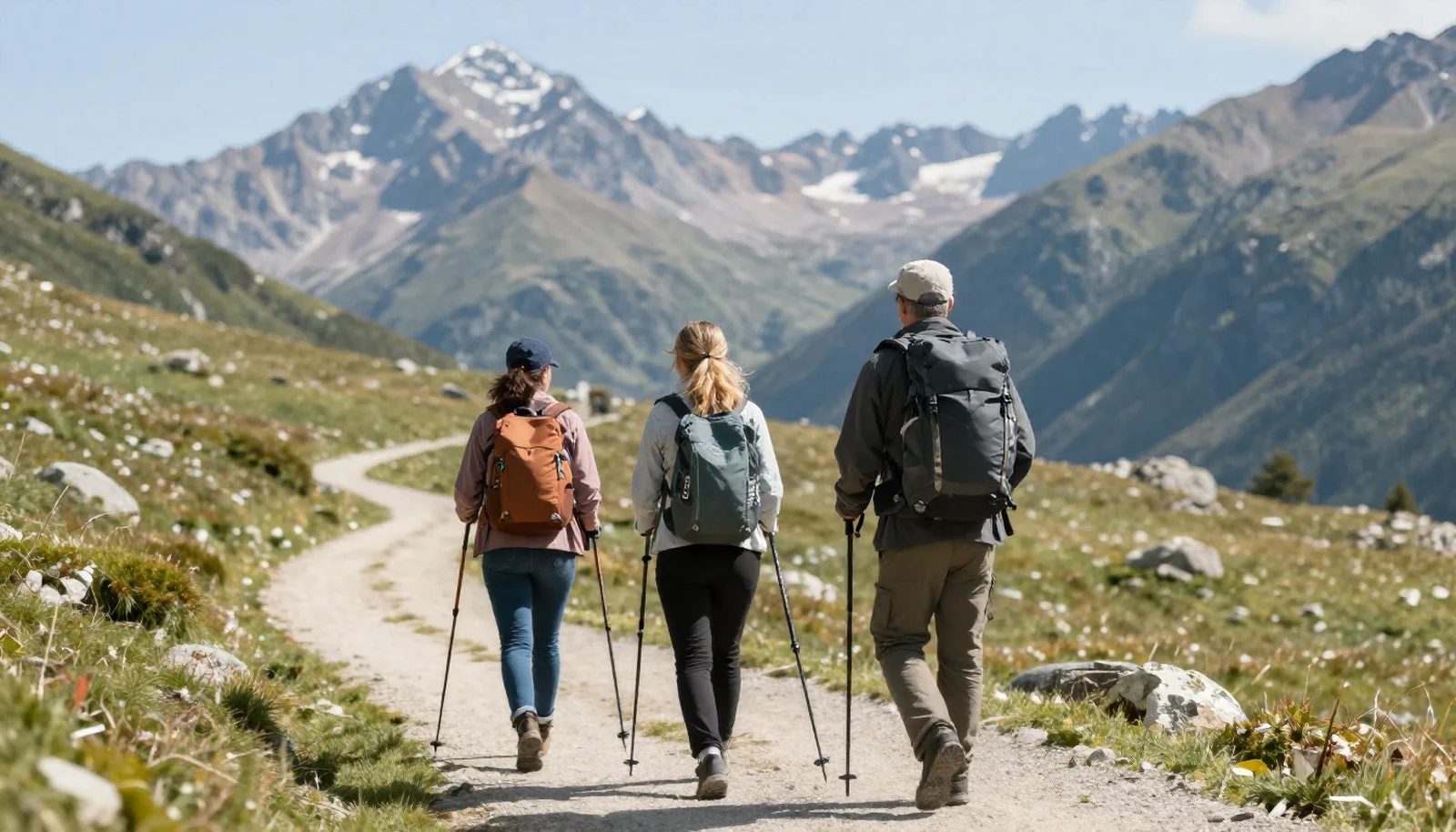
Hiking with others is often safer and more enjoyable, especially in an unfamiliar place. Many countries have hiking clubs and associations that organise group walks, and some of them welcome visitors. Local tourist offices, outdoor shops, hostels and community event pages can point you to group hikes. Guided walks with a qualified local guide are another good option, especially for more demanding routes, because a guide knows the terrain, the weather and the local rules.
You can also find hiking partners among other travellers. On mytripdate you can see who is in the same city on the same dates and send them a message, so you may find someone who also wants to go for a hike. If you are meeting someone for the first time, take a few precautions: chat on the site first, look for a verified profile, choose a popular, well-marked route where other people are around rather than a remote trail, and tell someone where you are going and with whom.
Whoever you hike with, agree on the route, the pace and the turnaround time before you start, and make sure everyone carries their own water and basic gear.
Frequently asked questions
Is it safe to hike alone abroad?
Many people do, but the risks are higher. If you go alone, choose a popular, well-marked route, check the weather, tell someone your plan and turn back early if anything feels wrong.
Does travel insurance cover mountain rescue?
Not always. It depends on your policy and on the activity, the altitude and the location. Read the policy wording and ask your insurer before you go.
How do I find people to hike with in a new country?
Look for local hiking clubs, guided walks, tourist office events and other travellers. For a first hike with someone new, pick a busy, well-marked trail.
What is the most important thing to bring on a day hike?
There is no single item, but water, a warm layer, a rain jacket and a way to navigate offline are the basics. A charged phone and a headlamp add a safety margin.