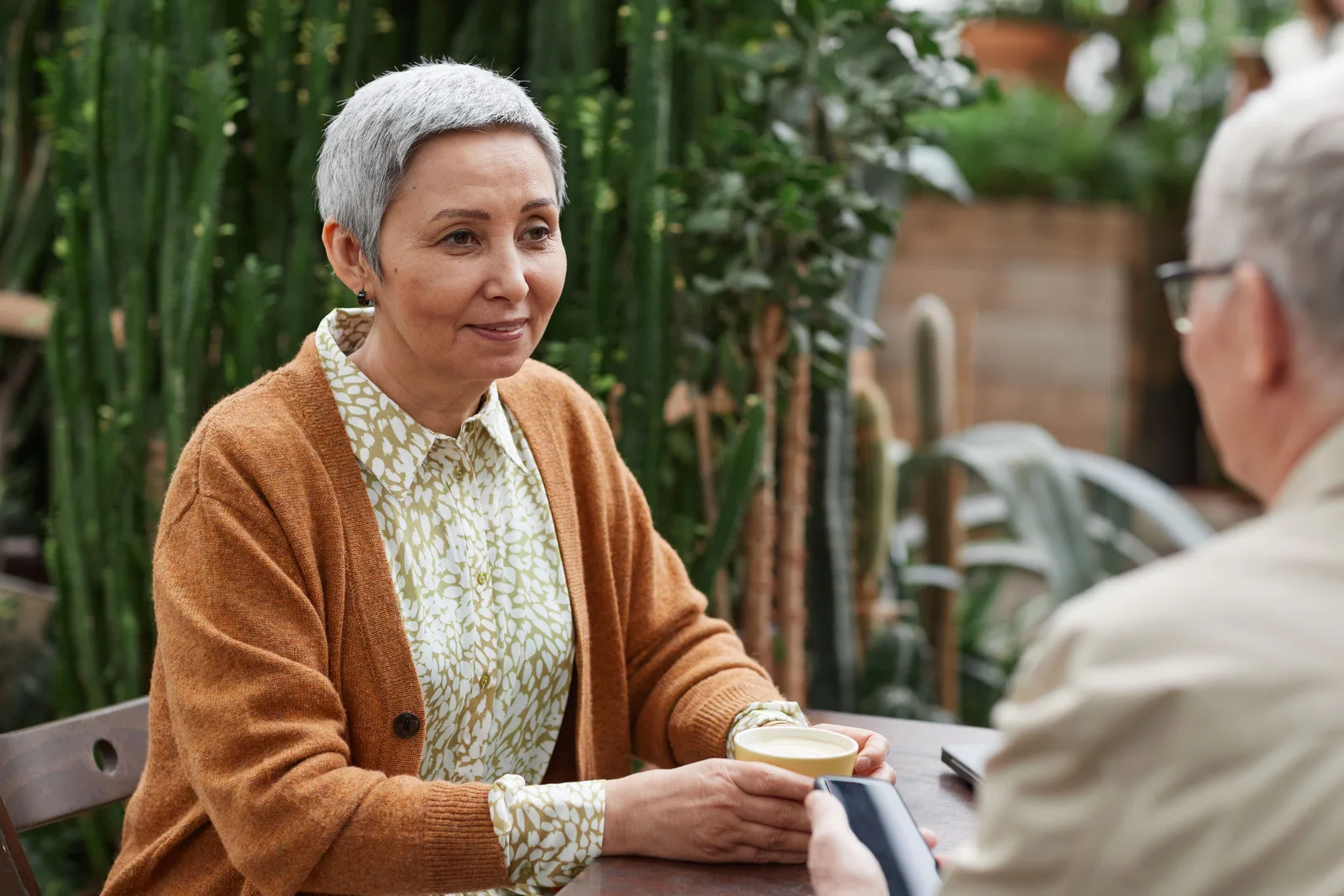
Turn 30 and the cultural messaging around dating gets suddenly louder and more anxious. Friends start asking questions with a different register. Relatives who previously ignored your love life develop strong opinions. Articles that were previously just mildly interesting start feeling personally targeted. The implication, if you absorb enough of it, is that dating in your 30s is the same activity as dating in your 20s but with worse odds and a ticking sound somewhere in the background.
This is mostly nonsense. But there are real differences between dating at 24 and dating at 33 — not because time has run out on anything, but because you're a different person with different self-knowledge, different priorities, and a different set of social circumstances. Some of those differences make dating easier. Some make it more complex. Here's an honest breakdown of what actually changes.
What Changes in Your 20s: The Context
Dating in your 20s tends to happen inside social structures that generate opportunities without much effort. University halls, house parties, friend-of-a-friend networks, jobs where you're surrounded by people your age. The infrastructure does a lot of work. You meet a lot of people, there's built-in context for repeated encounters, and the stakes often feel lower because both you and the other person are still actively building your lives and your identity. There's an implicit flexibility — this might go somewhere, it might not, and that's relatively fine either way.
The flip side is that 20s dating often involves a lot of uncertainty about what you actually want. Not necessarily in a bad way — some of that exploration is necessary and good. But it means that plenty of connections in your 20s go nowhere not because they were bad but because neither person had enough self-knowledge yet to recognize what was worth pursuing. You pick up skills and preferences and hard-won information about yourself that's genuinely useful later. It's a phase of accumulation even when it doesn't feel like it.
What 20s dating is good at
- Volume — you meet a lot of people, which gives you data
- Low-stakes experimentation — you're allowed to not know what you want
- Social infrastructure that generates opportunities passively
- Lower sunk-cost reasoning — you're less likely to stay in something because you've already invested so much
What Changes in Your 30s: The Person
The most significant shift between 20s and 30s dating isn't the external landscape — it's internal. By your early 30s, most people have a significantly clearer picture of what they actually want, what they genuinely can't tolerate, and what things they thought mattered don't really matter to them specifically. This clarity is both an advantage and occasionally a filter that cuts your options down.
The advantage is that you waste less time. A 22-year-old might stay in a bad dynamic for six months because they're not sure if their discomfort is reasonable or if they're just being too demanding. A 32-year-old who's been through enough to know the difference tends to figure that out faster and act on it sooner. This is not because they're less romantic or more jaded — it's because they have better calibration data.
Self-knowledge as a dating asset
Knowing what you want and being able to articulate it clearly is one of the genuinely attractive qualities that tends to develop with age. People who know themselves — who can say "I'm an introvert who needs a fair bit of time alone" or "I'm not looking for anything serious right now but I do want something consistent" — are easier to make decisions about. The uncertainty and performance of early 20s dating, where neither person really knows themselves yet and both are trying to seem like whoever the other person wants, is genuinely exhausting in hindsight. Skipping that phase because you actually know yourself is a real advantage.
The Social Infrastructure Problem
One thing that does get harder in your 30s is the social architecture. The organic meeting-people structures of early adulthood largely disappear, and people who don't actively build alternatives end up with smaller social circles than they had at 25. This affects dating indirectly but significantly — if you mostly know the same people you've known for years and don't have many new people entering your life, your dating pool naturally narrows.
Apps help with this in a very direct way. Whatever else you think about dating apps, they solve the infrastructure problem — they provide access to people outside your existing social circle who've also opted in to meeting someone. MyTripDate is a good example of a platform built for exactly this: casual connection, flexible intent, people who actually want to meet up rather than just chat indefinitely. This kind of tool is more useful in your 30s than in your 20s precisely because the passive meeting-people channels have dried up. The willingness to use apps strategically, and to treat them as a social tool rather than a last resort, correlates with how well people do at dating in their 30s.
The shrinking social circle
Friends couple up, move to different cities, have children, develop competing priorities. The group dynamic of your mid-20s where Saturday nights were spontaneous and the guest list was always expanding becomes in your 30s a more intentional, scheduled thing. This is fine — it just means you have to be more proactive about where you meet new people. A 30-year-old who's actively trying — classes, apps, events, yes to invitations — consistently does better than one who's waiting for the social infrastructure of their 20s to come back.
What Gets Better in Your 30s
Here is the list that doesn't get talked about enough when the culture is busy being anxious about age and dating:
- Confidence — not performance-confidence, actual confidence, from having done enough things to know you're capable
- Communication — you've had enough conversations and enough endings to know roughly how to do both
- Knowing the difference between a dealbreaker and a preference
- Caring less about what the other person thinks you should be, and more about whether you actually click
- Financial stability that means first dates don't have to be tense about who pays for what
- Genuine interests that make you more interesting to talk to
- Less tolerance for drama, which filters out a lot of exhausting dynamics early
The 30-year-old version of you brings more to a dating context than the 23-year-old version did. This doesn't get said enough.
What Stays the Same
Plenty of things don't change. The first-date nerves. The signal-reading. The hope that this one is interesting. The disappointment when it isn't. The moment where you realize you actually like someone and the slight vulnerability that creates. Human connection has the same basic mechanics at 23 and 35 and 45. The emotional texture of meeting someone you're genuinely interested in doesn't age out. Neither does the fun of early dating when it's going well — the planning, the anticipation, the good conversation, the first time you realize you're comfortable around each other.
The idea that your 30s represent some kind of diminished dating experience compared to your 20s is largely a cultural artifact with no basis in the actual experience of people doing it. Most people who date in their 30s — and choose to see it as what it actually is rather than as a race they're losing — have a better time than they did in their 20s. More self-knowledge, more genuine connection, less tolerance for nonsense.
The Practical Bit
Whether you're 23 or 34, the things that actually improve your dating life are the same: be an interesting person with things going on, be honest about what you want, don't disappear on people without a word, and stay open to connections that look slightly different from what you expected. The decade matters less than the execution.
If you want a place to meet people without the pressure of performing which version of yourself you think is most marketable — MyTripDate is designed around exactly that. Three modes of connection, casual energy, no pressure to decide what something is before you know what it is. Whether you're in your 20s figuring things out or your 30s knowing what you want, the approach is the same: meet interesting people, see what happens.