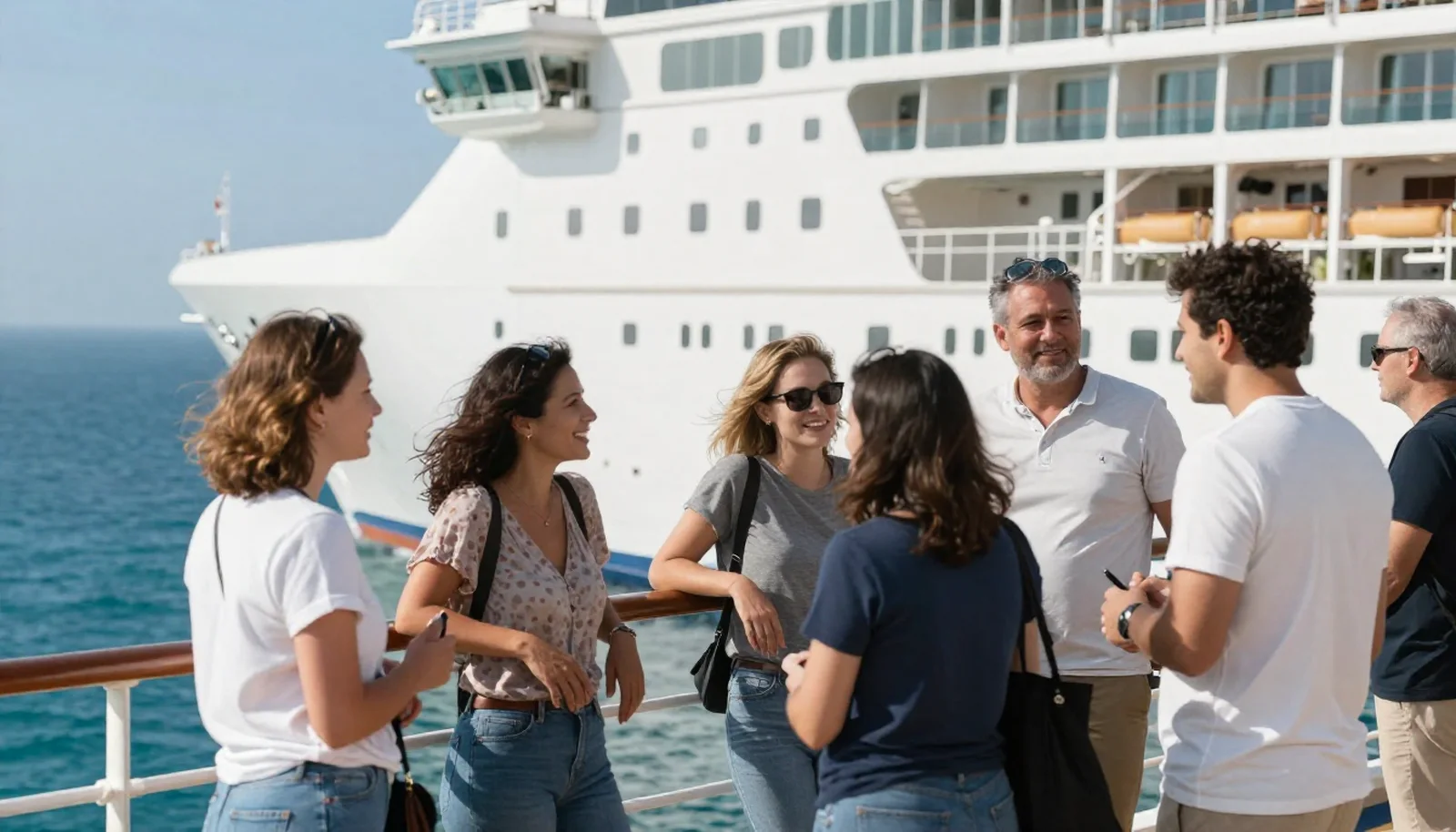
On your first cruise, expect a floating hotel that moves between ports: you unpack once, eat and sleep on board, and spend port days ashore. Before you book, check which cabin type suits you and exactly what the fare includes, because drinks, service charges and shore excursions are often extra. On board you will join a safety drill, follow a daily programme of activities and need to be back on the ship on time in every port. Meeting people is usually easy, thanks to shared tables, group activities and, on many ships, meetups for solo travellers.
This guide is for passengers on large ocean cruise ships. Every cruise line has its own rules and prices, so treat it as a general overview and confirm the details with your cruise line before you go.
Which cabin type should you choose?
Most ships offer three basic types of cabin. Inside cabins have no window. They are usually the cheapest and very dark at night, which some people love for sleeping. Ocean view cabins have a window or porthole that does not open, so you get daylight and a view. Balcony cabins have a private outdoor space, which is pleasant for quiet mornings and for watching the ship come into port. Many ships also have suites with more space and extra services.
Think about how much time you will actually spend in your cabin. If you plan to be out all day, an inside cabin may be enough. If you are prone to seasickness, a cabin on a lower deck near the middle of the ship usually feels less movement. Also check the deck plan: a cabin directly below a busy deck or next to a lift can be noisy.
What does the cruise fare include, and what does it not?
The fare usually covers your cabin, meals in the main restaurants and buffet, and much of the entertainment. Beyond that, it varies a lot between cruise lines and fare types. Check these points before you book:
- Drinks. Water and some hot drinks are often included, while alcohol, soft drinks and speciality coffee may cost extra. Some lines sell drinks packages.
- Service charges and tips. Many lines add a daily service charge per person to your onboard account. Find out how much it is and whether it is already in your fare.
- Shore excursions. Organised tours in port are usually paid separately.
- Speciality restaurants, spa and some activities. These often have their own price.
- Internet. Wi-Fi on board is often sold as a separate package and can be expensive.
- Taxes and port fees. Sometimes these are shown separately from the main price.
On most ships you pay with a cabin card linked to your account, so it is easy to lose track. Check your balance in the app or at guest services during the trip.
How can you deal with seasickness?
Large ships are built to be stable, and many people feel little or no movement in calm weather. In rougher seas, these simple steps can help: spend time in the fresh air, look at the horizon, eat light meals, drink water and go easy on alcohol. A cabin low down and in the middle of the ship can also help.
If you know you get motion sickness, talk to your doctor or pharmacist before the trip about suitable remedies, as some can cause drowsiness or may not suit you. Most ships have a medical centre, but treatment on board is usually not included in the fare, so check what your travel insurance covers.
Embarkation day and the safety drill
Embarkation day is the day you board. Your cruise line will usually give you a check-in time, ask you to complete online check-in in advance and tell you which travel documents you need. Arrive at the port in good time and keep your documents, medicines and anything valuable in your hand luggage, as your larger bags may only reach your cabin later in the day.
Before or soon after the ship leaves, there is a safety drill, often called a muster drill. You learn where your assembly station is and what to do in an emergency. Attendance is normally required. On some ships you watch a safety video on the app or your cabin TV and then check in at your station in person. Follow the crew's instructions; it only takes a short time.
Port days: how not to miss the ship
Port days are a highlight, but they come with one firm rule: be back on board by the time the ship gives you. This all aboard time is usually some time before departure. If you are late, the ship may leave without you, and getting to the next port at your own cost can be difficult and expensive.
- Note the all aboard time from the daily programme or the app before you go ashore.
- Check which time you are using. Ship time and local time can be different, so set your watch or phone to ship time.
- Take what the ship tells you to carry, such as your cabin card and identification, and the contact details given for the port.
- Plan a buffer. Traffic, queues and long walks back to the pier often take longer than expected.
If you book a tour independently, rather than through the cruise line, make sure it ends well before the all aboard time. Ask the cruise line what happens if a tour they sell runs late, as their policy may differ.
Dress codes, internet and other small surprises
Many ships are casual during the day, but some have evenings with a dress code, such as smart or formal nights. Requirements differ, so read your cruise line's guidance before you pack. Also bring comfortable shoes for port days, a light jacket for windy decks and swimwear.
Internet at sea can be slow and expensive. Be careful with your phone too: at sea it may connect to a maritime network with very high roaming charges. If you do not want surprises, use flight mode or switch off mobile data and roaming, and use the ship's Wi-Fi or wait for port. Also check whether the ship needs adapters for its sockets.
How to meet people on board, especially if you travel solo
A cruise is one of the easier holidays for meeting new people, because everyone shares the same space for days. Some ideas:
- Look for solo traveller meetups. Many ships list them in the daily programme, often early in the cruise.
- Ask for a shared table at dinner. In the main restaurant you can often ask to be seated with other guests.
- Join group activities. Quizzes, dance classes, sports, fitness classes and talks make conversation easy.
- Join a group excursion. Spending a day ashore with others gives you something to talk about at dinner.
If you travel alone, note that many fares are priced per person for two sharing, so a solo traveller may pay a single supplement. Some ships have cabins designed for one person; ask your cruise line.
Keep your usual good sense. Get to know people in public areas first, keep an eye on your drinks, and do not feel obliged to invite anyone to your cabin. A clear "no, thanks" is enough. If someone makes you feel uncomfortable, tell guest services or the security staff. When you go ashore with new acquaintances, tell someone where you are going and keep an eye on the time. On mytripdate you can see who will be in the same city on the same dates, for example in your departure port before or after the cruise, and send them a message. Look for a verified profile, chat on the site first and meet in a public place.
Frequently asked questions
Is a cruise a good idea for solo travellers?
For many people, yes. The daily programme, shared tables and group activities make it easy to meet others. Check whether your fare has a single supplement and whether the ship has solo cabins.
Do I have to tip on a cruise?
Many cruise lines add a daily service charge to your account instead of expecting individual tips. Rules and amounts differ, so check your cruise line's information before you travel.
What happens if I miss the ship in port?
The ship may sail without you, and you may have to reach the next port at your own cost. Contact the port contact given by the cruise line straight away, and always plan to be back early.