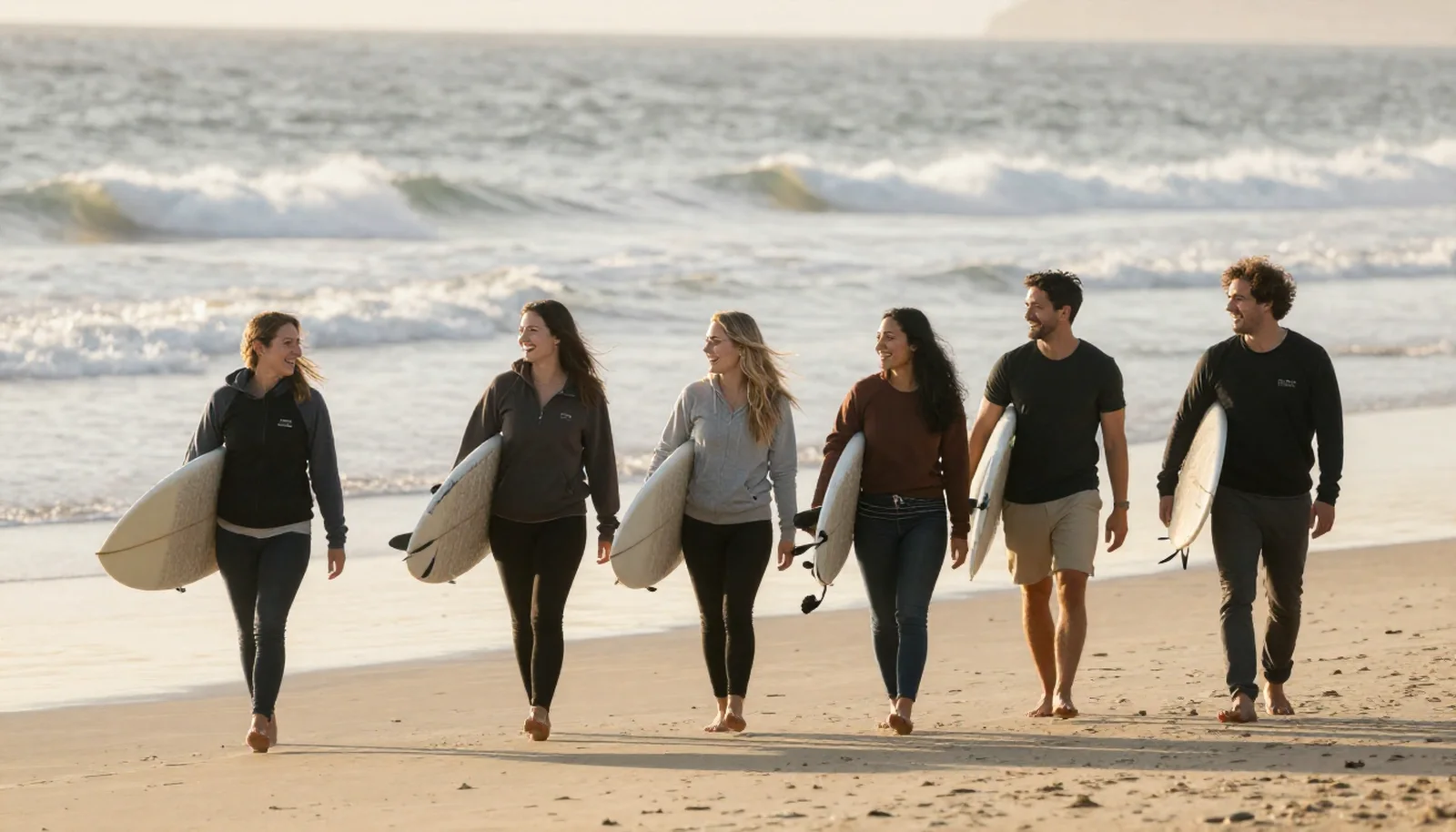
Activity holidays are one of the most natural ways to meet people while travelling, because a shared activity gives everyone something to do and talk about together. On a surf camp, a yoga retreat, a cooking class, a hiking group or a dive course, you spend hours with the same small group, learn side by side and share meals or breaks, so conversations start on their own. To get the most out of it, choose a group size and level that suit you, read recent reviews, check the instructor's qualifications and keep your own boundaries clear.
Many travellers find it hard to start a conversation with strangers in a bar or a hostel. An activity removes much of that pressure. This guide explains why shared activities make meeting people easier, looks at the most common types of activity holidays, and covers what to check before you book, how to join on your own and how to stay safe.
Why does a shared activity make it easier to meet people?
When you do something together, you do not need an opening line. The activity itself gives you topics: the waves this morning, a difficult pose, a sauce that went wrong, the view from the top of the trail. People who choose the same kind of holiday often share some interests, too, which makes it easier to find common ground. And because you meet the same people again and again over several days, there is time for a first short chat to turn into a longer conversation, without anyone having to rush.
Learning something new also puts everyone on a similar level. Beginners laugh at the same mistakes and help each other, and that kind of shared experience tends to bring people closer faster than small talk.
Which activity holidays are good for meeting people?
Almost any group activity can work, but some formats are especially social:
- Surf camps: lessons in small groups, shared accommodation and evenings together after a day in the water. Many camps welcome complete beginners.
- Yoga retreats: daily classes, shared meals and often quiet time, too. The atmosphere is usually calm, and conversations tend to happen over meals and walks.
- Cooking classes: from a single afternoon to a course of several days. You cook, then sit down and eat what the group has made, which is a very easy way to get talking.
- Hiking and trekking groups: walking side by side for hours leaves plenty of room for conversation, and reaching a summit or a hut together builds a sense of team.
- Dive courses: you train with a buddy and a small group, and the time between dives and in the classroom is naturally social.
If you are not sure which one suits you, start with something short, such as a one-day cooking class or a single surf lesson, before booking a full week.
How do you choose the right camp, retreat or course?
A good experience depends a lot on the organiser. Before you book, it helps to check a few things:
- Group size. Smaller groups make it easier to get to know everyone and usually mean more attention from the instructor.
- Level. Make sure the activity matches your fitness and experience. Ask if beginners are welcome, or if you need previous experience.
- Recent reviews. Read several reviews on more than one platform and pay attention to comments about safety, organisation and the atmosphere in the group.
- Instructor qualifications. For surfing, diving and mountain activities, ask which certification or training the instructors have and check that it is recognised. For diving in particular, make sure the centre and the course are certified by a recognised training organisation.
- What is included. Check whether equipment, insurance, meals and transport are part of the package, and read the cancellation conditions.
Also check whether your travel insurance covers the activity you plan to do. Some policies exclude certain sports or require extra cover, so read the terms or ask your insurer.
Can you join an activity holiday alone?
Yes, and many people do. Activity holidays are often a comfortable choice for solo travellers, because the schedule gives structure to your days and you are part of a group from the start. Some organisers offer shared rooms to avoid a single supplement; if you prefer your own room, ask about it when booking. It is also fine to take time for yourself: you do not have to join every dinner or evening event.
If you would like to meet people before you arrive, mytripdate can help. You can see who will be in the same city on the same dates and send them a message, so you might find someone to join a cooking class or a hike with. Chat on the site first, check whether the profile is verified and meet in a public place.
Boundaries and safety
A friendly group atmosphere does not mean you have to say yes to everything. A few simple rules help:
- Know your limits. If conditions feel too difficult, such as big waves, a steep trail or a deep dive, say so. A good instructor will respect it.
- Keep your own plans. Share your accommodation details and itinerary with someone you trust at home.
- Take your time with new people. Getting to know someone in a group is a good start, but it is fine to keep some distance until you feel comfortable.
- Trust your instincts. If something about the organiser, the equipment or a person feels wrong, step back and talk to the organiser or leave.
Health matters, too. If you have a medical condition, ask your doctor whether the activity is suitable before you go, and tell the instructor about anything they should know.
Frequently asked questions
Do I need experience to join a surf camp or dive course?
Many surf camps and beginner dive courses are designed for people with no experience. Check the level of the course before booking, and ask the organiser if you are unsure.
Are yoga retreats only for advanced practitioners?
No. Many retreats welcome all levels and offer simpler variations of poses. Read the description and ask about the daily schedule if you are a beginner.
Is a cooking class a good way to meet people in a short stay?
Yes. A single class of a few hours is easy to fit into a city break, and cooking and eating together makes conversation easy.
The bottom line
A shared activity takes the pressure out of meeting people. Choose a surf camp, yoga retreat, cooking class, hiking group or dive course that matches your level, check reviews and qualifications, and keep your boundaries clear. With a little preparation, you can come home with new skills and, quite often, new friends.