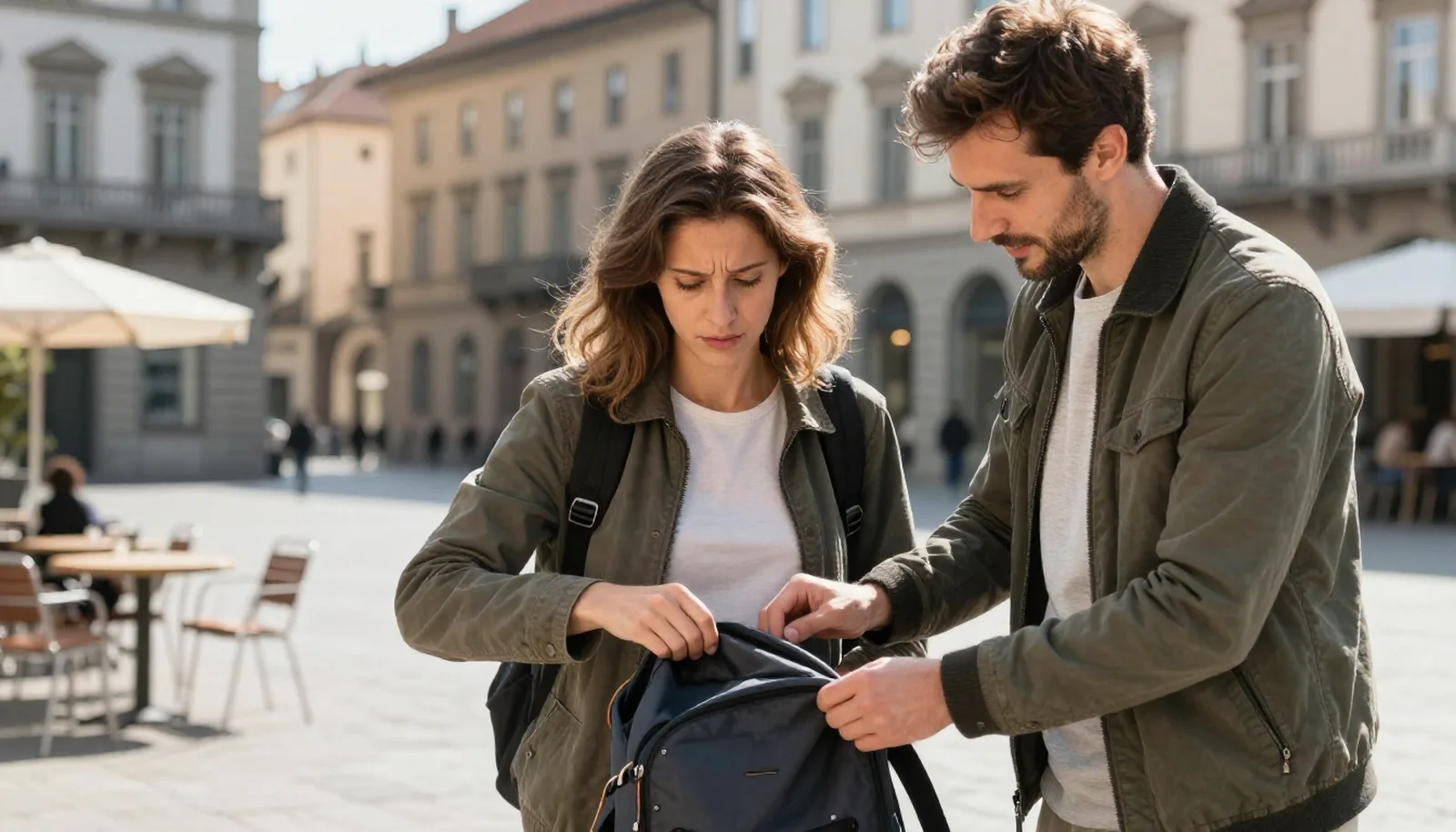
Most tourist scams follow a few familiar patterns: an overcharging taxi, a friendly stranger who distracts you, a "closed" attraction with a helpful guide who takes you somewhere else, a free gift that suddenly has a price, or a fake ticket. The best protection is to know these patterns, use official services, keep your valuables secure and feel free to say no and walk away when something feels wrong.
Scams happen in many popular destinations, and most travellers lose no more than a little money and some pride. Knowing how the common tricks work makes them much easier to spot. They usually rely on moments when you are tired, in a hurry, unsure of local prices and keen to be polite, and they often push you to decide right now. Real help rarely comes with pressure. This guide describes the typical types in general terms, because the details vary from place to place and change over time. For current local warnings, check your government's travel advice and the official tourist information for your destination.
Taxi and meter scams
Taxi problems are among the most frequently reported. Typical tricks include a meter that is "broken", a much longer route than necessary, a fixed price far above the normal fare, or a claim that your hotel is closed and you should go to another one.
- Use official taxi ranks, licensed taxis or a reputable ride-hailing app.
- Find out the approximate fare before you get in, for example in a map or ride app.
- Where taxis use a meter, ask the driver to switch it on before you set off.
- Follow the route on your phone's map.
- Carry some small notes so that "no change" does not turn into an extra tip.
What is the fake police officer scam?
Someone who claims to be a police officer, sometimes showing a badge or wearing part of a uniform, asks to check your wallet or passport for "counterfeit money" or "drugs". While doing so, they take some of your cash or try to see your card details. Often a stranger approaches you first, and the "officer" appears shortly afterwards.
Real police officers are unlikely to ask to inspect the cash in your wallet on the street. Stay calm and polite, do not hand over your wallet, and offer to go with them to the nearest police station, or call the local emergency number to check. Carry the documents local rules require, and keep a copy of your passport separately.
"It's closed today": the detour scam
A friendly stranger tells you that the museum, temple or sight you are heading to is closed today, perhaps for a holiday, a ceremony or lunch. They kindly suggest another place and may even arrange transport. The new destination turns out to be a shop, a gallery or a tour where you are pressured to buy something at an inflated price.
The answer is simple: check for yourself. Walk to the entrance, look at the official website or ask at an official ticket office. If a stranger insists on taking you somewhere, decline politely and carry on.
How do distraction pickpockets work?
Pickpockets often work in pairs or small groups: one person distracts you while another takes your phone or wallet. Common distractions include:
- Spilling something on you and then offering to help clean it off.
- Asking you to sign a petition or answer a survey.
- Dropping something in front of you, or asking for directions with a large map.
- Crowding around you at the doors of trains and buses or on escalators.
- Starting an argument or a street show that draws a crowd.
In crowds, keep your phone and wallet in a front or zipped pocket, or in a bag worn in front of you. If someone touches you unexpectedly or creates confusion, first put a hand on your belongings, then step away.
Fake tickets, tours and card skimming
Unofficial sellers may offer tickets for sights, events or transport that are fake, already used or far more expensive than at the official counter. Cheap tours sold on the street can turn out very different from what was promised. Online, fake accommodation listings and messages asking you to pay outside the booking platform are a common risk. Buy tickets from official websites, counters or authorised sellers, read recent reviews from several sources, keep payments and messages inside the platform you booked with, and be wary of offers far cheaper than everywhere else.
Card skimming means a device is attached to a cash machine or card reader to copy card details, often with a hidden camera or a fake keypad to record the PIN. Use cash machines inside banks or in busy, well-lit places, check the card slot and keypad for anything loose or unusual, cover your hand when you type your PIN, and do not accept "help" from strangers at the machine. Turning on payment notifications in your banking app lets you see every transaction straight away. If a card terminal or cash machine offers to charge you in your home currency, the exchange rate used may cost you more; many travellers choose the local currency, but check your own bank's fees.
Why do "free" gifts end up costing money?
Someone ties a bracelet around your wrist, hands you a flower, a sprig of herbs or a small gift, or invites you to take a photo with them. Then they ask for money, sometimes loudly or with friends nearby, so that paying feels easier than arguing.
Keep your hands to yourself, say a clear "no, thank you" and keep walking. If something has already been put in your hand, you can give it back. You do not owe anything for something you did not ask for.
What should you do if you are scammed?
Even careful travellers are sometimes caught out. If it happens, focus on limiting the damage:
- Get to a safe place. Your safety matters more than your money. Do not chase or confront anyone aggressively.
- Block your cards. Contact your bank straight away if a card or card details may have been taken. Keep your bank's emergency number somewhere other than your wallet.
- Report it to the police. Ask for a written report or reference number; insurers and banks often need one.
- Contact the platform or company. If you paid through a booking site or for a tour, report the problem to them as soon as possible.
- Secure your accounts. If your phone was stolen, change important passwords and use the device's tracking or remote-lock function.
- Get help with documents. If your passport is gone, contact your country's embassy or consulate.
Afterwards, be kind to yourself. Scams are designed to work on ordinary, polite people. When you meet other travellers, for example people you have found on mytripdate who are in the same city on the same dates, the same common sense applies: chat on the site first, check whether the profile is verified, meet in a public place and never send money to someone you have only met online.
Frequently asked questions
What is the most common tourist scam?
It varies by place, but overcharging taxis, distraction pickpocketing and unofficial ticket sellers are among the types travellers mention most often.
How can I tell if a police officer is real?
If you are unsure, ask to see identification, do not hand over your wallet and offer to continue at the nearest police station. You can also call the local emergency number to check.
Should I carry cash or cards when travelling?
Many travellers carry a mix: a card for most payments, a backup card kept separately and a small amount of local cash for small purchases and emergencies.